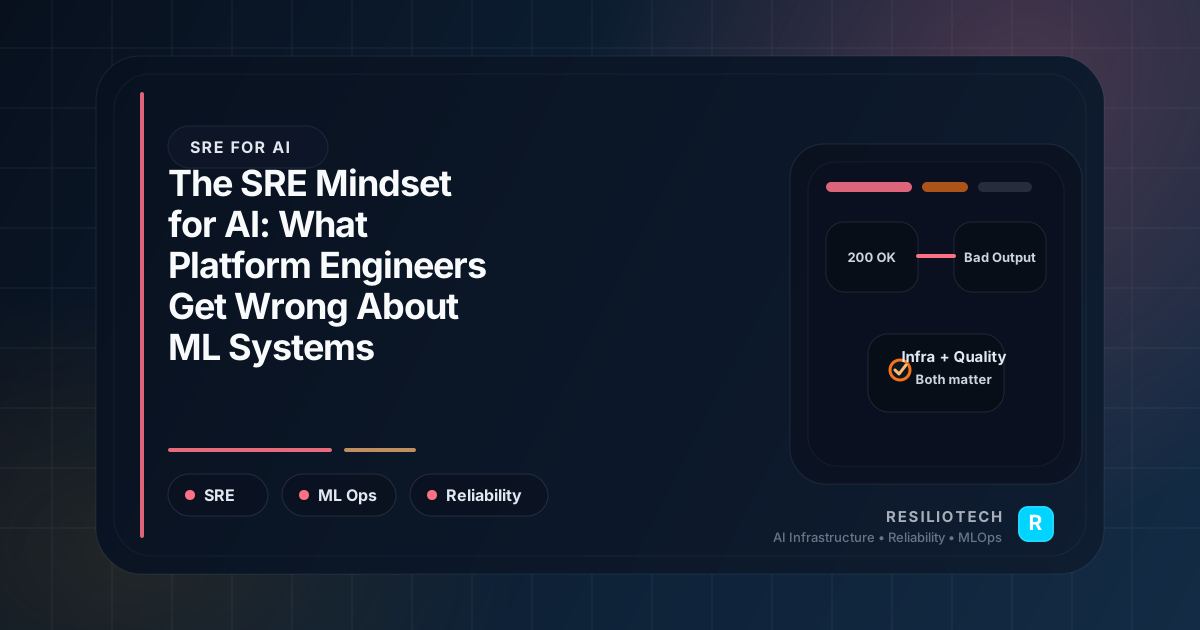
The worst ML pipeline failures are not the ones that crash loudly. They are the ones that keep running and produce output that is stale, malformed, or logically wrong while every surrounding system still reports green.
That is the real problem behind ml pipeline silent failure. To truly solve it, you need to move beyond infrastructure monitoring and into AI Observability.
Start With Data Quality Checks
The easiest place to catch silent failure is where data enters or exits a stage. You can use libraries like Great Expectations or simple Python validation logic within your Argo Workflows stages.
def validate_dataset(df, expected_min_rows=1000000):
    row_count = len(df)
    null_rate = df['target_column'].isnull().mean()

    if row_count < expected_min_rows:
        raise ValueError(f"Data volume anomaly: {row_count} rows found")

    if null_rate > 0.05:
        raise ValueError(f"Null rate spike: {null_rate:.2%}")

    return True
Define Pipeline SLOs, Not Just Job Status
Most teams never define a service level objective for their data and ML pipelines. A useful AI System SLO can be built around freshness and completeness.
For example, you can track these metrics in Prometheus and alert on them:
groups:
- name: ml_pipeline_alerts
  rules:
  - alert: PipelineFreshnessBreach
    expr: (time() - ml_pipeline_last_success_timestamp_seconds) > 86400
    for: 1h
    labels:
      severity: critical
    annotations:
      summary: "Pipeline {{ $labels.pipeline_name }} is stale"
      description: "Last successful run was over 24 hours ago."
Alert on Actionable Items
Actionable alerts tell the team what failed and why it matters. This is a critical part of a mature AI Incident Response strategy.
Instead of "Pod Restarted," your alerts should say:
- "Training input row count dropped 80% from baseline."
- "Batch scoring output completeness fell below 98%."
Final Takeaway
Ml pipeline silent failure is usually not a scheduler problem; it's a correctness-detection problem. By implementing schema validation, output checks, and SLO-based alerting, you can catch issues before they impact your Production RAG Systems or predictive models.
At Resilio Tech, we build "Self-Healing" ML pipelines that don't just alert on failure, but proactively prevent bad data from reaching production. We help you implement the validation layers and observability stacks required for high-stakes AI.
Stop guessing if your pipelines are healthy. Contact Resilio Tech for a reliability audit.