0%
MLOps

Stop Building ML Platforms — Start Shipping ML Features

An opinionated case against ML platform overengineering: why many teams should ship one production model well before spending a year building a generalized internal platform.

7 min read1,246 words

There is a pattern that shows up in company after company.

Leadership decides machine learning matters. A few promising use cases appear. An internal team forms. Then, instead of shipping the first production model quickly, the company starts designing a platform.

Not a deployment path. Not a narrow serving stack. A platform.

Twelve months later, the team has:

  • architecture diagrams
  • orchestration layers
  • internal SDKs
  • model registry abstractions
  • three environments
  • zero meaningful production usage

This is one of the most common forms of ml platform overengineering.

The problem is not that platforms are always bad. The problem is sequencing. Many teams build a generalized ML platform before they have earned the right to generalize anything.

The Mistake: Solving for the Fifth Model Before Shipping the First

The argument for a platform usually sounds reasonable.

Teams say they need:

  • repeatable deployments
  • standardized monitoring
  • model versioning
  • feature pipelines
  • safe rollout workflows

All of that is true eventually.

But eventually is doing a lot of work in that sentence.

If you have not yet served one high-value model in production, you do not know:

  • which workflows actually repeat
  • which abstractions are stable
  • which controls are essential versus theoretical
  • what your real bottlenecks are

That means the first version of the “platform” is usually a pile of guesses disguised as architecture.

The result is predictable: teams spend months building generalized systems around imagined future needs while the actual product teams wait for something useful to appear.

Why the Platform Team Trend Goes Wrong

The current “platform team” trend borrows a lot from internal developer platform thinking in software infrastructure. Some of that logic carries over. A lot of it does not.

ML systems have more variation than most teams want to admit:

  • batch scoring and online inference are different
  • classical models and LLM applications have different operational needs
  • internal analytics use cases and customer-facing product features have different risk profiles

When teams force all of that diversity into one grand platform too early, they often create the worst of both worlds:

  • too much process for simple use cases
  • not enough specialization for hard ones

The platform becomes an organizational project before it becomes a product-enabling tool.

That is the key distinction. A useful internal platform removes friction from shipping ML features. An early platform initiative often creates friction in the name of future efficiency.

What Teams Should Do Instead

If you want to ship ml features faster, take the opposite path:

  1. Pick one model or ML-powered feature with obvious business value.
  2. Ship that one use case with real production standards.
  3. Document what was painful.
  4. Generalize only the parts that were painful twice.

That sequence is less glamorous than announcing an ML platform roadmap. It is also much more likely to produce a useful system.

For the first production use case, you probably need only a narrow slice of infrastructure:

  • one deployment path
  • one monitoring baseline
  • one rollback mechanism
  • one set of data contracts
  • one ownership model

That is not “anti-platform.” It is incremental platform development grounded in reality.

Ship One Model Well

“Ship one model well” sounds simple, but most teams still skip the hard parts.

For a first production model, “well” means:

  • the model can be deployed repeatably
  • latency and error rates are measured
  • failures are visible
  • there is a rollback path
  • ownership is clear when something breaks

That is enough to learn a huge amount.

You will discover:

  • whether the real pain is serving, data freshness, observability, or approvals
  • whether you need more standardization in CI/CD or in feature pipelines
  • whether the use case actually deserves continued investment

Those lessons are vastly more valuable than an elegant internal abstraction layer built before any production contact.

The Real Cost of Premature Platforms

Premature platforms cost more than salary.

They also create:

  • delayed product learning
  • delayed customer feedback
  • delayed revenue impact
  • organizational confusion about who owns outcomes

A team can spend 12 months building a platform and still avoid the hard question:

  • did we make the business meaningfully better with ML?

That is why ml platform vs features is often the wrong framing. Features are not a distraction from the platform. Features are the evidence that tells you what platform you actually need.

Without that evidence, platform work drifts toward internal optimization theater.

When a Real Platform Effort Does Make Sense

There are cases where a dedicated platform investment is absolutely justified.

For example:

  • multiple teams are already shipping models
  • the same deployment and monitoring problems repeat every quarter
  • compliance, auditability, or multi-tenant controls need a common standard
  • there is proven demand for shared workflows across the company

At that point, the platform is no longer speculative. It is responding to repeated operational pain.

That is the threshold many companies skip. They create a platform team based on ambition, not repeated demand.

A Better Rule: Standardize the Path, Not the Universe

The better approach is narrow and boring:

  • standardize one serving path
  • standardize one observability stack
  • standardize one release process
  • standardize one incident workflow

Do that for one successful use case first.

Then extend it to the second and third use cases. Only after that should you decide which parts deserve to become reusable platform primitives.

This is how strong internal platforms usually emerge in practice. Not from a perfect up-front design, but from a small number of working patterns that proved themselves under load.

Counterargument: “If We Don’t Build the Platform Now, We’ll Create Tech Debt”

This sounds responsible. It is often wrong.

Yes, shipping quickly can create debt. But preemptively building for every future possibility creates a different kind of debt:

  • abstraction debt
  • coordination debt
  • maintenance debt
  • process debt

A narrowly scoped production system with a few sharp edges is often easier to improve than a broad platform with weak adoption and unclear value.

The goal is not no debt. The goal is debt attached to real usage and real business value.

That is manageable. Speculative infrastructure debt usually is not.

What Leaders Should Ask Instead

Instead of asking, “Should we build an ML platform team?” ask:

  • what is the first ML feature that must work in production?
  • what controls are required for that feature specifically?
  • which parts are likely to be reused within the next two quarters?
  • what can stay manual until usage proves the need to automate?

Those questions produce better technical decisions because they force the team to anchor infrastructure work to product outcomes.

Final Take

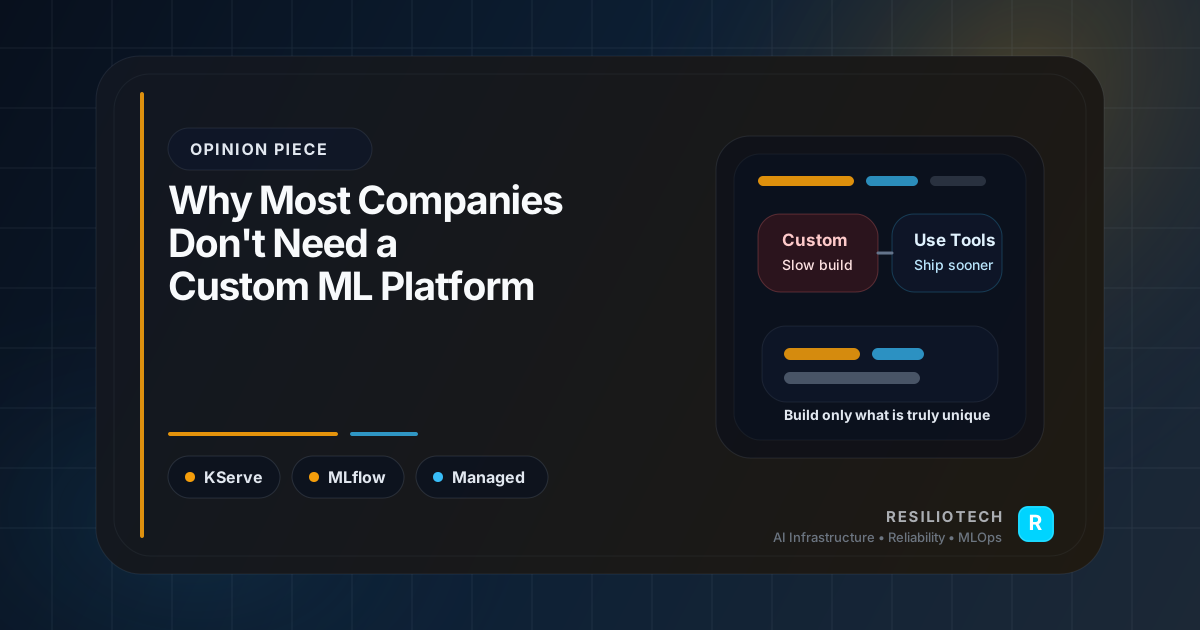
Most companies do not need an ML platform first. They need one production ML feature that works reliably.

That is the missing discipline in a lot of ML infrastructure planning. Teams want the elegance of a platform before they have the evidence of repeated use.

If you want to avoid ml platform overengineering, resist the urge to design for the future in the abstract.

Ship one model well. Learn from the friction. Then generalize the parts that are actually repeated.

That is how you ship ml features faster without creating another internal platform project that takes a year and serves almost nothing.

Share this article

Help others discover this content

Share with hashtags:

#Mlops#Platform Engineering#Product Strategy#Model Deployment#Engineering Management
RT

Resilio Tech Team

Building AI infrastructure tools and sharing knowledge to help companies deploy ML systems reliably.

Article Info

Published4/8/2026
Reading Time7 min read
Words1,246
Scale Your AI Infrastructure

Ready to move from notebook to production?

We help companies deploy, scale, and operate AI systems reliably. Book a free 30-minute audit to discuss your specific infrastructure challenges.