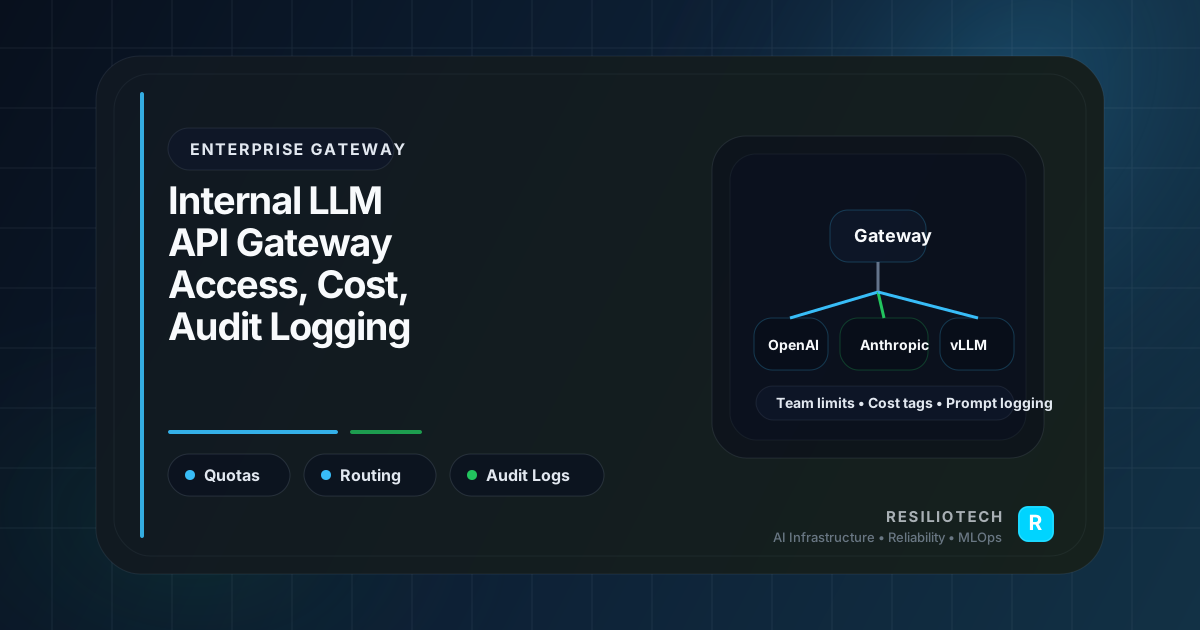
As soon as more than one team or product starts calling LLMs, you need a gateway.
Without a gateway, every service reimplements the same concerns badly:
- auth
- model routing
- rate limiting
- logging
- cost tracking
- fallback behavior
That leads to inconsistent policies, runaway spend, and no clean place to introduce controls later.
A production LLM gateway should be treated like shared infrastructure, not a helper library.
What the Gateway Should Own
At minimum, the gateway should own:
- request authentication
- tenant-aware quotas
- parameter validation
- model routing
- usage logging
- fallback policy
- response normalization
It should not contain deep product-specific business logic. Its job is to make LLM access safe, observable, and efficient across many callers.
Why Direct-to-Provider Access Breaks Down
The simplest integration is each app calling a model endpoint directly. That works until:
- one team forgets rate limits
- another hardcodes the most expensive model everywhere
- prompt sizes drift upward without visibility
- no one can answer cost by team or tenant
- you need a new provider or self-hosted model
The gateway solves those problems by centralizing policy.
Core Flow
A good request flow looks like this:
- client authenticates to the gateway
- gateway validates tenant, route, and limits
- gateway chooses the model based on policy
- gateway logs token expectations and metadata
- request is sent to provider or self-hosted backend
- gateway normalizes the response and records actual usage
class GatewayPolicy:
def route(self, request):
if request.route == "support-search":
return "fast-rag-model"
if request.requires_json:
return "strict-json-model"
if request.priority == "low-cost":
return "small-general-model"
return "default-chat-model"
This route decision should be explicit and observable.
Add Tenant Quotas Early
Quotas are not just a finance control. They are a reliability control.
Useful quota dimensions:
- requests per minute
- tokens per day
- concurrent requests
- expensive-model access
Example:
tenants:
startup-tier:
rpm_limit: 120
daily_token_limit: 500000
allowed_models: ["small-general-model", "fast-rag-model"]
enterprise-tier:
rpm_limit: 1200
daily_token_limit: 20000000
allowed_models: ["small-general-model", "fast-rag-model", "large-reasoning-model"]
Without quotas, the first noisy workload becomes everyone else's latency problem.
Route by Use Case, Not by Hype
The right question is not "Which model is best?"
The right question is "Which is the cheapest model that meets the quality bar for this workflow?"
Typical routing rules:
- small model for summarization and rewrite tasks
- structured-output model for extraction
- larger reasoning model for complex planning
- self-hosted model for internal or cost-sensitive traffic
That routing decision should be revisited regularly using real telemetry, not vendor marketing.
Normalize Parameters at the Gateway
Each provider and serving backend exposes slightly different options. If clients pass raw provider parameters directly, the integration surface becomes chaotic.
Normalize things like:
- max tokens
- temperature
- top-p
- response format
- tool-call settings
- timeout
This keeps clients stable even when backends change underneath.
Guardrails Belong Here Too
The gateway is often the right place for lightweight request and response guardrails:
- reject oversized prompts
- enforce allowed response modes
- block unsupported tools
- apply tenant-specific content policies
- redact sensitive logs
This is not a replacement for product-level policy, but it is the right place for shared controls.
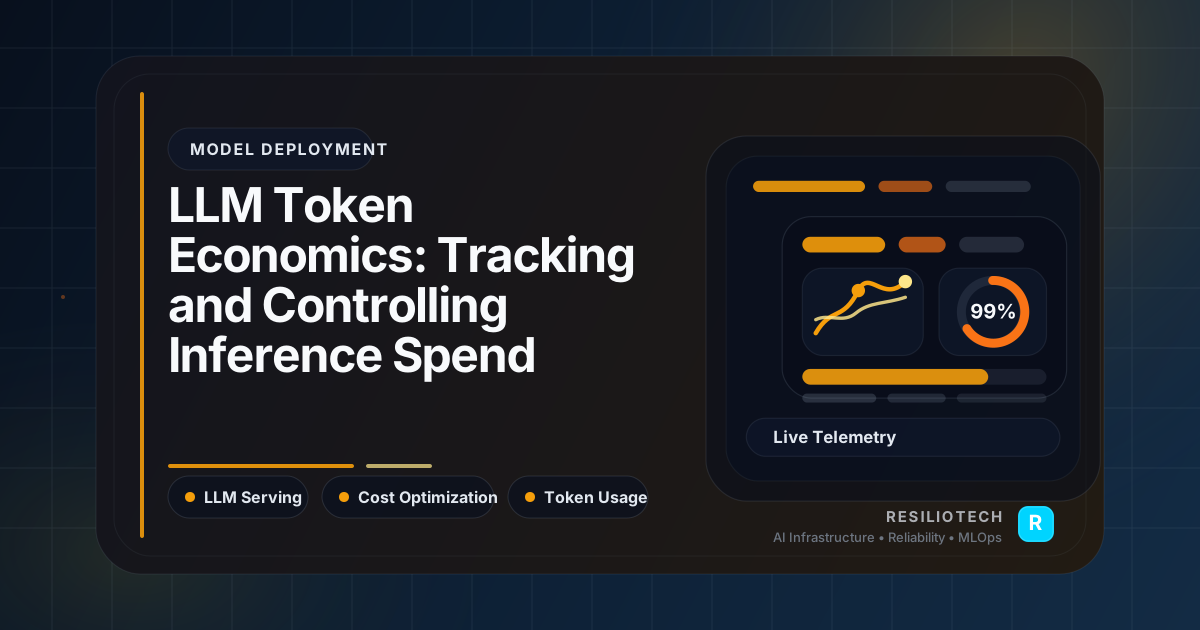
Cost Controls That Actually Work
Most teams say they want cost controls. Few implement them cleanly.
Start with:
- default model per route
- max tokens per route
- tenant usage dashboards
- fall back to smaller models when the quality bar allows it
- alert on sudden token growth
{
"route": "agent-plan",
"tenant": "acme",
"chosen_model": "small-general-model",
"fallback_model": "large-reasoning-model",
"prompt_tokens": 1420,
"completion_tokens": 280,
"cost_usd_estimate": 0.021
}
Once you can see cost by route and tenant, you can actually optimize it.
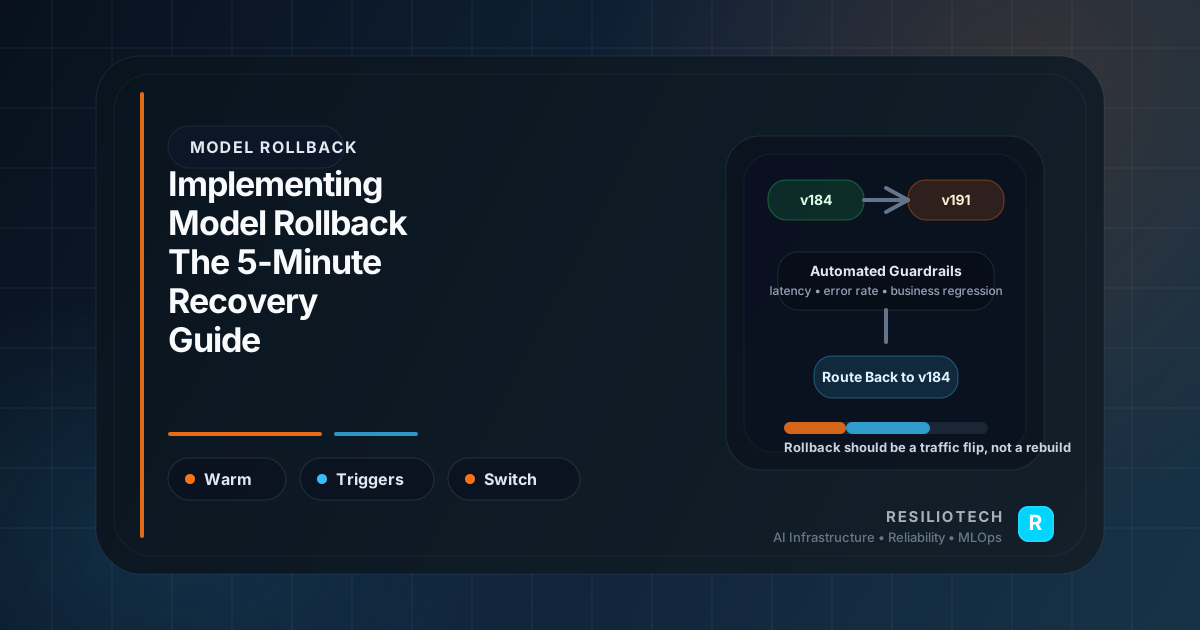
Fallbacks Need Policy, Not Guesswork
Fallback is useful only when it is predictable.
Examples:
- if the primary provider times out, use a smaller backup model
- if JSON generation fails twice, move to a stricter model
- if the self-hosted cluster is saturated, shift overflow to a managed provider
Every fallback should answer:
- when it triggers
- whether quality changes
- how the event is logged
Silent fallback is a bad pattern. It hides important system behavior.
What to Monitor
The gateway dashboard should include:
- requests per route
- chosen model distribution
- rate-limit rejections
- token usage by tenant
- fallback rate
- provider error rate
- cost by route and tenant
- p95 latency by backend
If the gateway exists but cannot explain who is using which model and at what cost, it is incomplete.
Common Architecture Mistakes
These are common:
- Putting routing logic in every client
- No tenant-aware quotas
- No cost telemetry
- No normalization layer, so providers leak into app code
- No clear fallback policy
The result is usually operational sprawl and billing surprises.
A Good Starting Design
You do not need to overbuild this.
Start with:
- one gateway service
- per-route model policies
- per-tenant quotas
- structured request logs
- usage dashboards
- one tested fallback path
That gets you most of the value early.
Final Takeaway
An LLM gateway is the control plane for shared model usage. It is where routing, limits, and cost discipline should live.
Teams that add the gateway early move faster later because model changes, provider changes, and policy updates happen in one place instead of everywhere.
Need help designing a shared LLM platform? We help teams build gateway layers, routing rules, and usage controls that keep production AI fast, safe, and affordable. Book a free infrastructure audit and we’ll review your current architecture.